Bedding · Bed styling
How to Layer Pillow Shams for a Balanced Bed
A well-layered bed is less about piling on pillows than giving each one a purpose. Start with the right scale, build from practical pillowcases to decorative shams, and let fabric, color, and texture create a calm composition that still feels inviting at bedtime.
A bed is a small landscape
A bed gathers the eye as soon as someone enters a bedroom. Its broad surface can read as a quiet field of color, a study in texture, or a carefully arranged stack of layers. Pillow shams help shape that view. They frame the head of the bed, establish its visual height, and introduce details that connect sheets to coverlet or duvet. Yet the arrangement works best when it serves the people who sleep there, not just the room’s appearance.
The word “balanced” does not mean perfectly matched or crowded with cushions. It means the arrangement feels considered: proportions suit the mattress, decorative details have room to show, and the colors and surfaces belong together. A few well-chosen layers can give a bed presence without making it difficult to use. The same principles work in a compact apartment, a guest room, or a spacious primary bedroom.
Think of the bed as a sequence. At the back are the pillows that provide height and support. In front are the pillows used for sleep, usually in everyday pillowcases. Shams can sit between or in front of these layers, adding structure and a more finished edge. A coverlet or duvet forms the broad background. Each layer has a job, and the whole arrangement becomes clearer when those jobs are not confused.
Begin with size and proportion
Before choosing color or trim, consider the dimensions of the bed and pillows. A pillow that is too small can disappear against a wide mattress; one that is oversized may overwhelm a narrow bed. Matching the pillow to the bed’s scale creates a stable foundation for everything that follows.
Standard, queen, and king pillows are designed for different widths and sleeping arrangements, while Euro pillows are typically square and often used as a decorative back layer. Sham sizing varies by manufacturer and region, so check the measurements rather than relying on the label alone. A sham should fit its insert smoothly, with enough room to avoid strained seams but not so much extra fabric that the pillow slumps inside it.
For a twin bed, a simple arrangement may be enough: one or two sleeping pillows, with a single sham or a pair of smaller decorative pillows in front. A queen often accommodates two sleeping pillows and one or two shams, depending on their dimensions. A king bed can support a wider row, but more is not automatically better. Leave visible space between the pillow arrangement and the edges of the mattress so the bed does not feel compressed by its own styling.
When in doubt, place the pillows on the bed before deciding what else to add. Stand back and look at the arrangement from the doorway. Do the pillows cover too much of the headboard? Are the outer edges aligned? Can the eye move from the tallest layer to the duvet without getting caught in a jumble? A quick trial can answer more than a long list of rules.
- Check the insert: measure the pillow, not just its case, and compare it with the sham’s stated dimensions.
- Respect the mattress width: the overall pillow row should feel proportional rather than spilling far beyond the bed’s edges.
- Consider the headboard: tall pillows can obscure a low or distinctive headboard; lower layers may let its shape remain part of the room.
- Make room for use: keep the number of pillows manageable enough that the bed can be prepared and cleared easily.
Build from useful to decorative
The most practical arrangement begins with the pillows used for sleep. Dress them in pillowcases that feel comfortable against the face and are simple to launder. Then add shams as a separate visual layer. This distinction matters: a sham may have an ornamental flange, embroidery, quilting, or a more structured finish, while a pillowcase is generally designed for regular nightly use.
One straightforward sequence is to place larger pillows at the back, followed by the sleeping pillows, then a smaller decorative sham at the front. Another is to put sleeping pillows behind a tailored sham row, especially when the headboard provides a firm backdrop. Neither method is universal. The right order depends on pillow sizes, the shape of the bed, and whether the decorative layer is meant to be removed at night.
For a relaxed room, avoid making every pillow stand rigidly upright. A slight lean or soft overlap can make the arrangement feel lived in. For a more formal look, align the edges and keep pairs symmetrical. In either case, let the shams remain visible. If they are buried behind a tall wall of pillows or hidden beneath a folded duvet, their contribution disappears.
It can help to start with fewer pieces than you think you need. Place the sleeping pillows, add one pair of shams, and pause. If the bed still looks bare, consider whether the issue is a lack of height, contrast, or texture. A single change may solve it. Adding several more pillows to compensate can make the arrangement less balanced rather than more complete.
Let texture carry some of the design
Color attracts attention, but texture gives the eye somewhere to linger. A smooth cotton pillowcase beside a softly rumpled linen sham creates contrast without requiring a bold print. Percale tends to have a crisp, matte character; sateen often appears smoother and more lustrous; linen usually shows a more visible natural texture. These differences can make a quiet, mostly neutral bed feel layered and tactile.
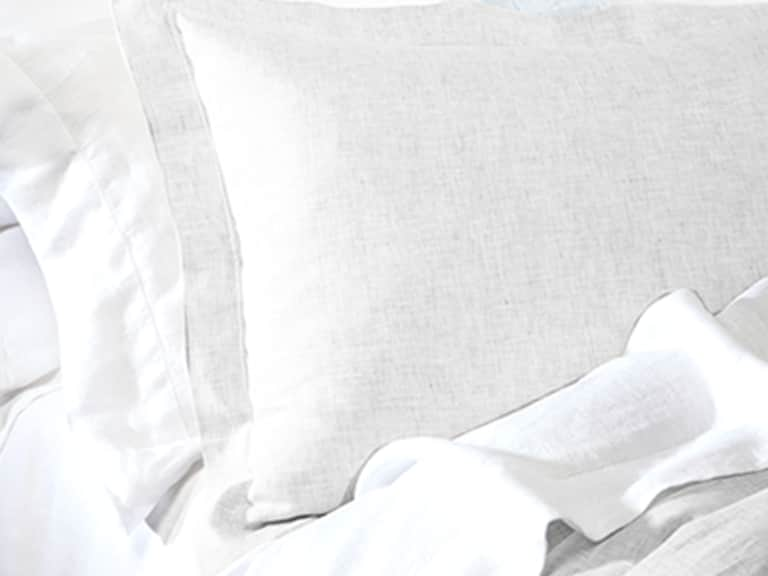
Quilted linen shams, for example, combine the irregular surface of linen with a raised stitched pattern. The quilting adds dimension and a little visual weight, so the piece can stand out even in a restrained color. In a room where the duvet, walls, and sheets are all plain, this sort of texture can become the focal detail. Where the bedding already includes stripes, embroidery, or a strong pattern, a solid quilted sham may be the calmer choice.
The trick is to vary surfaces without making every layer compete. Pair one noticeable texture with simpler companions. A quilted sham can sit against smooth sheets; a striped sham may work best with a plain coverlet; embroidered edges can provide enough detail without additional pattern. When every pillow has a different trim, weave, and motif, the bed can lose its sense of direction.
Natural fibers also change with use. Linen’s relaxed creases are part of its appearance, not necessarily a sign that it has been poorly maintained. Cotton percale may soften with washing while retaining a crisp feel. These qualities influence the atmosphere of a bed as much as color does: one may feel casual and airy, another neat and cool. Choose finishes that suit how the room is meant to feel, as well as how much upkeep is comfortable.
Coordinate color without matching everything
A cohesive bed does not require every textile to share the same shade. Instead, choose a small palette and repeat its colors in thoughtful places. A white sheet, sand-colored sham, and muted blue coverlet may feel connected if the tones are gentle and the contrast is consistent. One color can lead, another can support, and a third can appear as a small accent.
Start with the largest surface, usually the duvet or coverlet. Then select shams that either echo its color or provide a controlled contrast. If the bed is predominantly white, a flax or soft gray sham can add definition. If the coverlet is patterned, a solid sham can give the eye a place to rest. A narrow embroidered border or a stripe can repeat a detail found elsewhere in the room without copying it exactly.
Light changes a textile’s appearance. A cool gray may seem blue in morning light and warmer after sunset; ivory can look creamier beside bright white sheets. Before settling on a palette, view the fabrics in the bedroom at different times of day. If the covers are already in the home, fold them together or place a sham against the duvet. This simple check helps reveal whether the tones harmonize or merely seem similar in isolation.
Repeating a color once or twice is often enough. The same muted blue might appear in a sham and in a small accent elsewhere in the room, while the remaining layers stay neutral. This approach gives the arrangement a quiet thread of continuity without turning it into a uniform set.
Match the sham to the room’s mood
Shams can shift a bed from crisp and tailored to loose and relaxed. A plain hem and evenly aligned pillows create a clean outline. A flange adds a visible frame around the pillow. Embroidery introduces a fine line of detail, while a textured weave brings pattern through the structure of the cloth itself. None is inherently more formal or more useful; each changes how the bed reads.
For a calm, minimal room, keep the number of patterns low and use texture to provide interest. In a traditional space, a decorative edge or a carefully arranged pair can reinforce the room’s sense of order. In a more eclectic bedroom, one distinctive sham may connect colors or motifs across otherwise different layers. The goal is not to follow a fixed style category but to make the pillow arrangement feel related to its surroundings.
Consider the furniture and textiles already in view. A carved headboard, patterned rug, or strongly grained wooden frame may be visually active. In that setting, smooth, quiet pillow shams can preserve balance. A plain upholstered headboard and solid bedding offer more room for a quilted or patterned surface. The bed is part of a larger composition, and the pillows should have a conversation with the room rather than speak over it.
A few useful examples
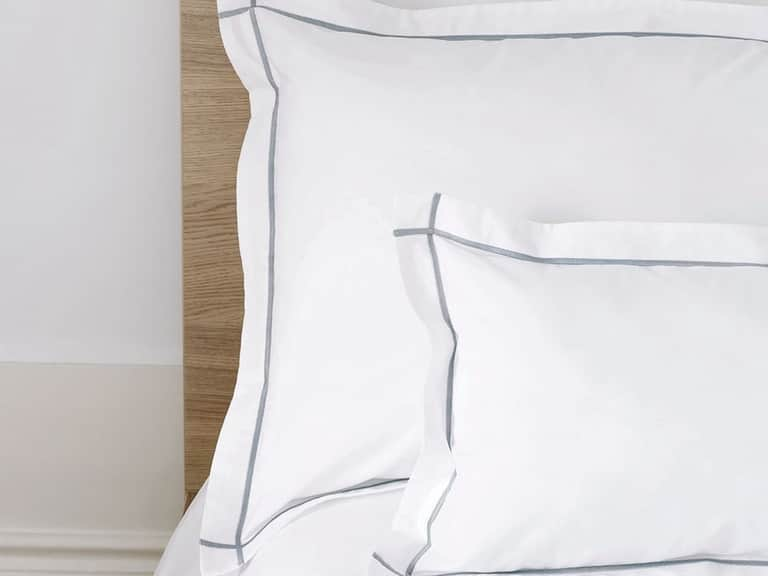
For a crisp, hotel-inspired arrangement, begin with white cotton pillowcases and add a pair of shams with restrained edge detailing. The Bovi Classic Hotel Pillowcases and Shams are made from cotton percale and feature a single embroidered line with cross-stitched corners. Those details offer a defined finish without relying on a large print. Keep the surrounding layers simple so the tailored edges remain easy to see.
For a softer, more relaxed bed, place linen pillowcases beneath a linen sham or use linen as the visible decorative layer against smooth cotton sheets. DownTown Company Layla Linen Pillowcases are made from flax linen and described as breathable, moisture-wicking, and designed to soften with use. Their natural texture can form a comfortable everyday base, with a sham in a related neutral shade adding height and definition.
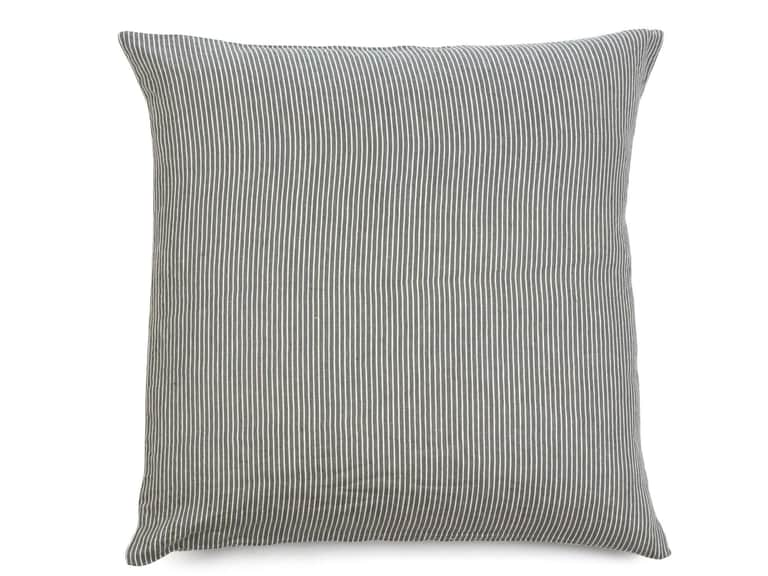
When a patterned accent is welcome, a stripe can introduce rhythm while remaining easy to pair with plain bedding. The Sailors Stripe Pillow Sham uses a washed linen twill in River and Ecru. Because the stripe already supplies visual movement, it is often most effective alongside solid sheets and a simple coverlet. Let the pattern occupy one clear place in the arrangement instead of repeating it across every layer.
These examples illustrate different approaches, not a prescription to assemble a particular set. A useful styling choice depends on the textiles already in the room, the size of the pillows, and whether the bed is used for sleeping or mainly arranged for a guest space. A beautiful sham is most successful when it fits the larger composition and remains practical to live with.
Care is part of the arrangement
Layering should not make ordinary care unnecessarily complicated. Decorative shams can collect dust and skin oils like other bedding, so check their labels and wash them at an interval suited to the material and household. Some can be laundered with the regular bedding; others may need gentler treatment. Follow the care instructions for the specific fabric, finish, and trim rather than assuming all shams behave alike.
Before washing, close zippers or fastenings, turn embroidered pieces inside out when appropriate, and separate colors according to the care label. Avoid overloading the machine. A crowded wash can rub textiles together and prevent a thorough rinse. Use only as much detergent as needed, and be cautious with fabric softeners: they may not suit every fiber or finish. Air-drying or low heat can help limit excess wear, but the garment label should guide the choice.
After laundering, reshape the sham while it is slightly damp and allow it to dry fully before putting it back on the insert. If a sham has become creased, a warm iron or gentle steam may help, provided the care label permits it. Linen’s natural texture does not need to be pressed into complete smoothness. The goal is a cared-for surface, not the erasure of the fabric’s character.
Keeping a spare set of pillowcases can also make the arrangement easier to maintain. The sleeping layer can be changed and washed routinely while decorative shams are handled on their own schedule. This separates the comfort of everyday use from the visual work of the finished bed.
Common missteps—and simple adjustments
- Choosing by appearance alone: a sham that looks appealing but fits poorly will wrinkle, gape, or strain. Confirm dimensions before arranging the bed.
- Using too many competing details: mix a prominent texture or pattern with quieter layers, rather than giving every pillow an equally strong finish.
- Ignoring the headboard: if pillows hide its outline, try shorter layers or a less upright arrangement.
- Making symmetry a rule: pairs create order, but a single accent can work when the rest of the bed is visually steady. Balance matters more than exact duplication.
- Forgetting the nightly routine: a bed that takes too long to clear may not suit everyday life. Keep decorative pieces easy to remove and store.
- Over-styling the front edge: a small sham or cushion should complete the arrangement, not block the useful sleeping pillows behind it.
When something feels off, remove one layer before adding another. This often reveals the real issue. Perhaps the contrast is too sharp, the pillow row is too tall, or the pattern is competing with the coverlet. Editing can restore balance more effectively than shopping for more pieces.
A balanced bed should still feel like a bed
The most successful pillow arrangement is one that looks composed in the morning and remains comfortable at night. It uses scale to establish order, texture to create depth, and color to connect the layers. Shams contribute a finished edge, but they do not need to dominate the room. In some bedrooms, a simple pair is enough; in others, a quilted surface or a restrained stripe gives the bed its character.
Begin with the pillows you actually use. Choose shams that fit them well, then arrange the layers from largest to smallest and pause before adding more. Look at the bed from across the room, but also consider the practical details: how the covers feel, how easily they wash, and where decorative pillows go when it is time to sleep.
From that balance comes a particular kind of welcome. The bed is not a display set apart from daily life, but a place where useful layers and thoughtful details meet. A smooth case, a textured sham, and a neatly draped coverlet can be enough to make the whole room feel settled—without sacrificing the comfort the bed is there to provide.